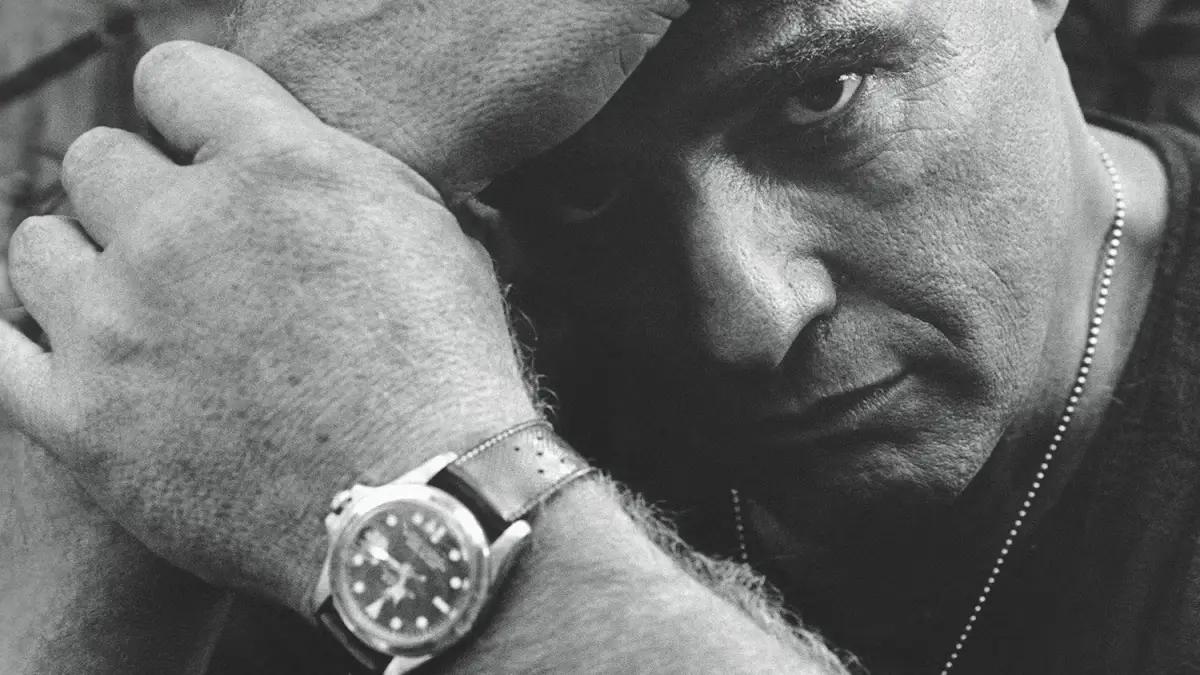
Seven watches, seven auction houses, and one very consistent lesson: the story on the caseback is worth more than anything inside the case.
A watch is a machine that tells time. None of these sold for what they sold for because of the machine. Every entry on this list is a story that happened to be wearable, and the auction houses that sold them knew it. Here is the complete price history, sale by sale, for the most valuable watches ever connected to a film role or a famous wrist.
Paul Newman's Rolex Cosmograph Daytona ref. 6239
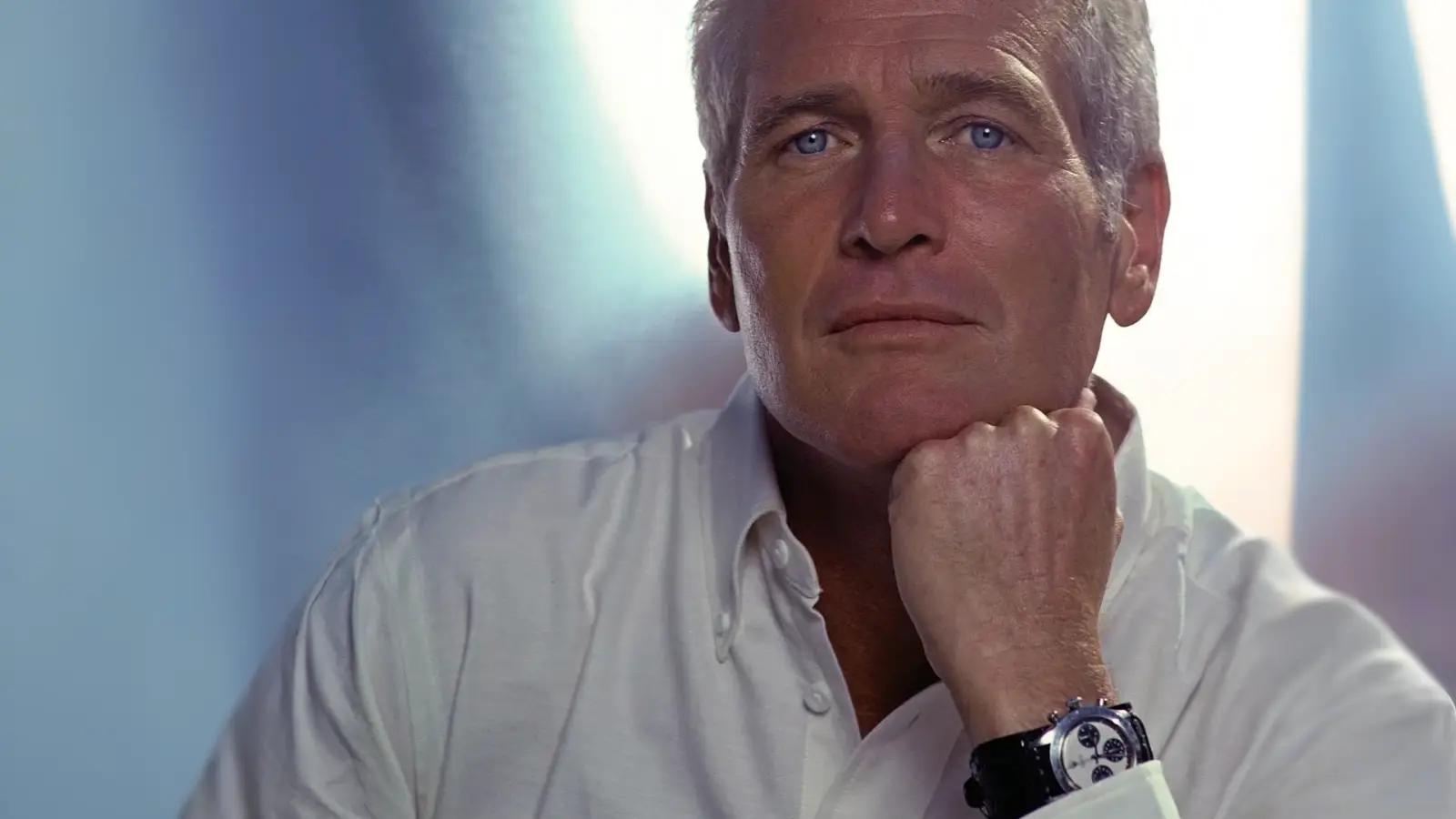
Joanne Woodward bought her husband this Rolex Daytona in the late 1960s and had the caseback engraved: "Drive Carefully Me." Newman was a serious amateur racing driver by that point, and he wore the watch for roughly fifteen years, timing his own races at Lime Rock and wearing it at the 24 Hours of Le Mans. Around 1984 he took it off and gave it to James Cox, his daughter Nell's boyfriend at the time, with a handwritten note. Cox wore it for another decade before learning, slowly, that the watch on his wrist had a cult following in collecting circles.
Nobody had called the exotic-dial Daytona configuration a "Paul Newman" while Newman was alive and unaware of it. A small group of Italian and American dealers coined the nickname in the late 1980s after noticing him photographed in it repeatedly, and the name spread through the collector market until it was impossible to call the dial anything else. Newman himself reportedly never used the phrase and seemed indifferent to the distinction.
Cox consigned the watch to Phillips in New York in 2017. The pre-sale estimate was roughly $1 million. What happened instead became one of the most retold twelve minutes in auction history: an opening phone bid of $10 million, wiping out every paddle in a room of more than 700 people, followed by a climb to a final hammer of $15.5 million between two remaining phone bidders. With buyer's premium, the total came to $17,752,500, the highest price ever paid for a wristwatch at public auction, a record that still stands. A significant portion of the proceeds went to the Nell Newman Foundation. The Rolex ref. 6239 was produced from roughly 1963 to 1969, powered by a manual-wind Valjoux 722 movement, 37mm stainless steel case, 50m water resistance. Other exotic-dial 6239s trade for $50,000 to $300,000 today. This specific one is the reason all of them are worth that much.
Marlon Brando's Rolex GMT-Master ref. 1675, worn in Apocalypse Now
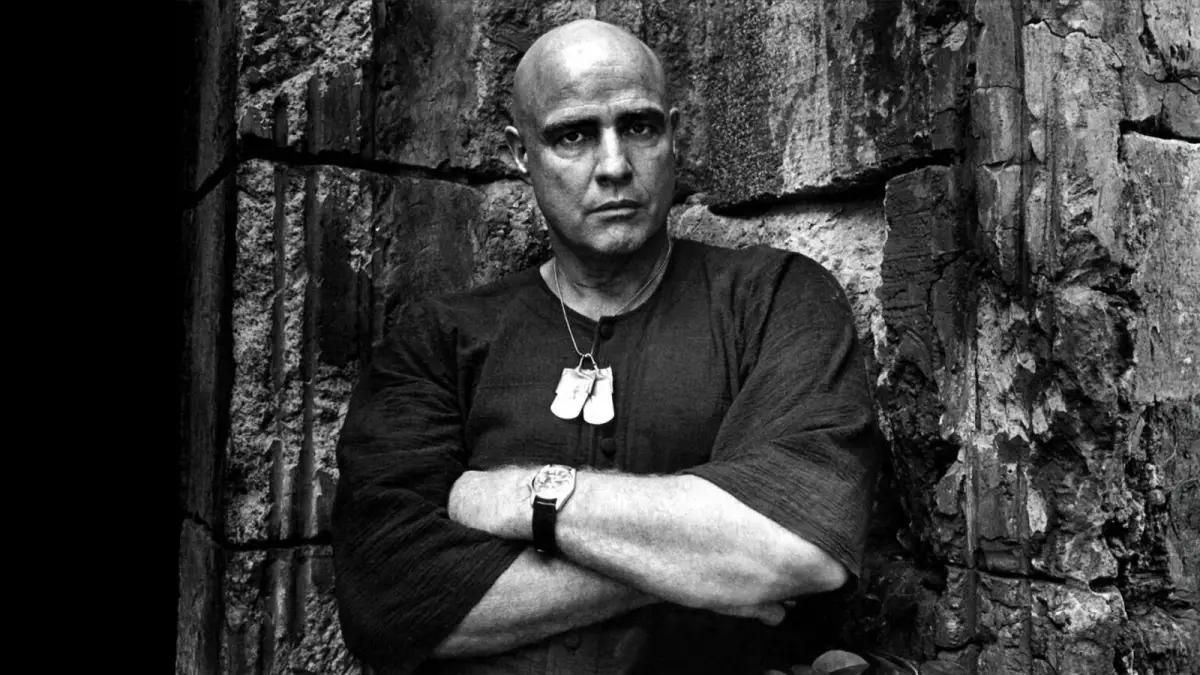
Marlon Brando owned two Rolex GMT-Master 1675s. One, from 1961, kept its original bezel, was later fitted with a replacement dial, and remains with the family, not for sale. The other, a 1972 example, is the one that matters. The costume department on Apocalypse Now told Brando to remove the bezel before shooting his scenes as Colonel Kurtz, arguing the watch's red and blue "Pepsi" bezel would stand out too much. Brando pushed back: "If they're looking at my watch, then I'm not doing my job as an actor." He lost the argument on the bezel and won it on the watch. It appeared on screen stripped bare, and Brando engraved "M. Brando" into the caseback himself.
In 1995, Brando gave the watch to his adopted daughter Petra Brando Fischer after her graduation from Brown University, along with a handwritten letter: "This watch is like a tank. You can do anything you want to it and it will keep on going." Petra passed it to her husband Russell as a wedding gift in 2003. He never wore it, calling it a sacred object. Petra eventually consigned it to Phillips, partly inspired by watching what the Paul Newman Daytona had just done at auction. It sold in December 2019 for $1,952,000, becoming one of cinema's most recognizable Rolexes. Collector Mohammed Zaman bought it that day, held it as part of a broader single-owner collection, and put it back on the market in November 2023. That sale, part of a collection that totaled close to $38 million, closed at CHF 4,582,500, more than double the 2019 price and the current record for the watch.
Steve McQueen's Heuer Monaco ref. 1133B, worn in Le Mans
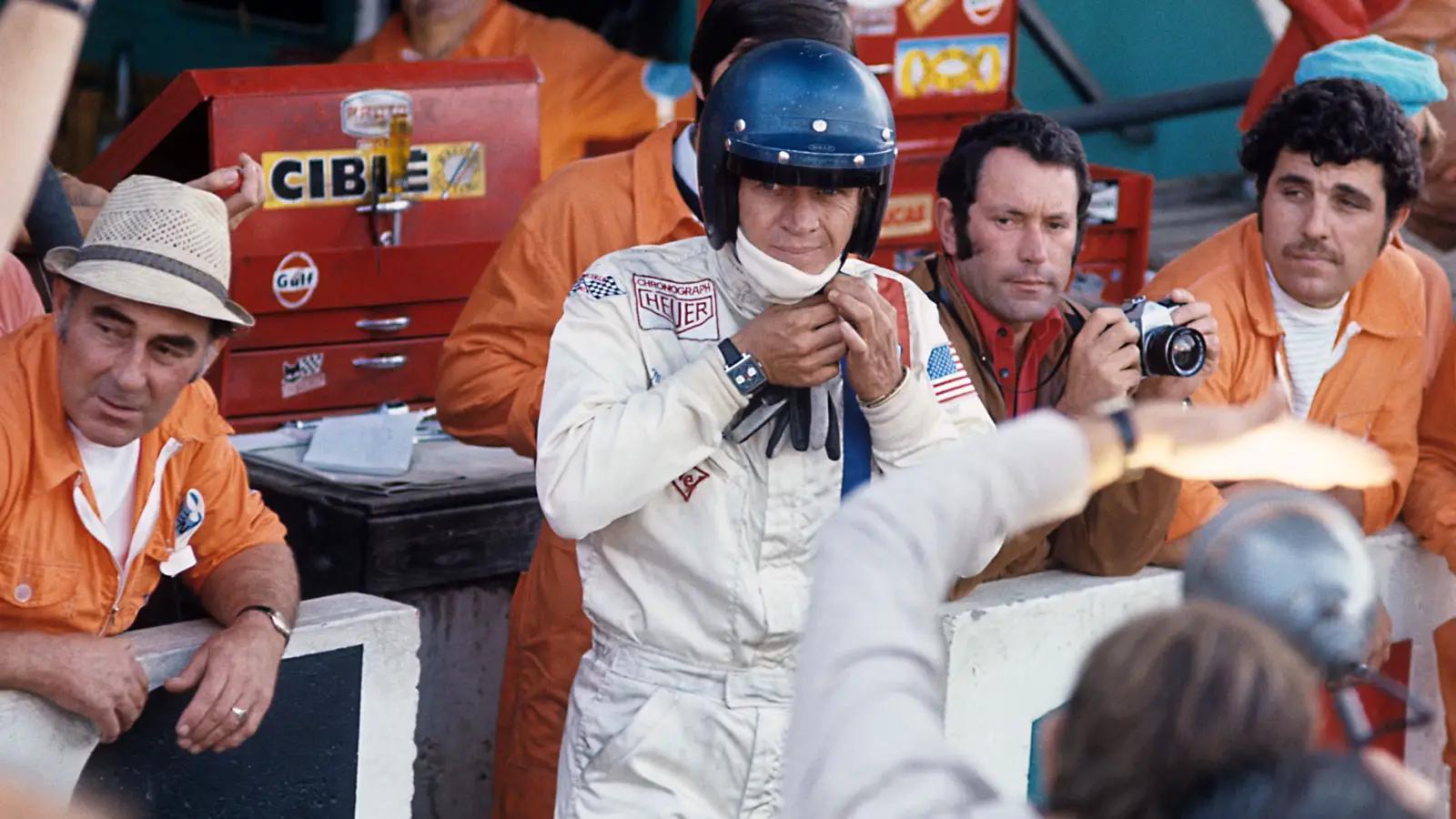
Property master Don Nunley laid out watches from Rolex, Omega, and Longines for McQueen to choose from on the set of Le Mans in 1970. McQueen's first pick was an Omega Speedmaster, but his driving suit already carried a Heuer patch, worn in tribute to his friend and driving coach Jo Siffert, Heuer's brand ambassador at the time. An Omega with a Heuer patch made no sense, so McQueen switched to a blue-dial Monaco, a watch he'd never heard of before that morning. Heuer had shipped six blue-dial Monacos to set for the production, smuggled across the French border undeclared after Jack Heuer told his own employee not to bother with customs. When filming wrapped, Heuer told Nunley to give the watches away. McQueen kept two for himself and gave them to friends. The other four stayed with Nunley.
Three of the six have since sold at major auction, each with its own documented history. One, given to McQueen's mechanic and friend Haig Altounian, sold at Phillips in 2020 for $2,208,000, still the record for any Heuer at auction. A second, worn for forty years by Le Mans mechanic Bevan Weston before he sold it in 2010, brought $1,440,000 at Sotheby's in 2024. A third, the one Nunley kept personally and later swore in a notarized affidavit was "worn by Steve McQueen most often throughout the film," came with roughly 500 pages of Nunley's own production archive and sold at Sotheby's in 2026 for just $640,000, the best-documented Monaco of the three and, oddly, the cheapest. The Monaco itself was a commercial flop when it launched in 1969. It didn't become a legend until TAG Heuer relaunched it in 1997, with the blessing of McQueen's son Chad. Worth noting for the record: it's a Heuer, not a TAG Heuer. TAG didn't buy the company until 1985, five years after McQueen died.
We may earn a commission on purchases.
Neil Armstrong's Omega Speedmaster Professional BA 145.022
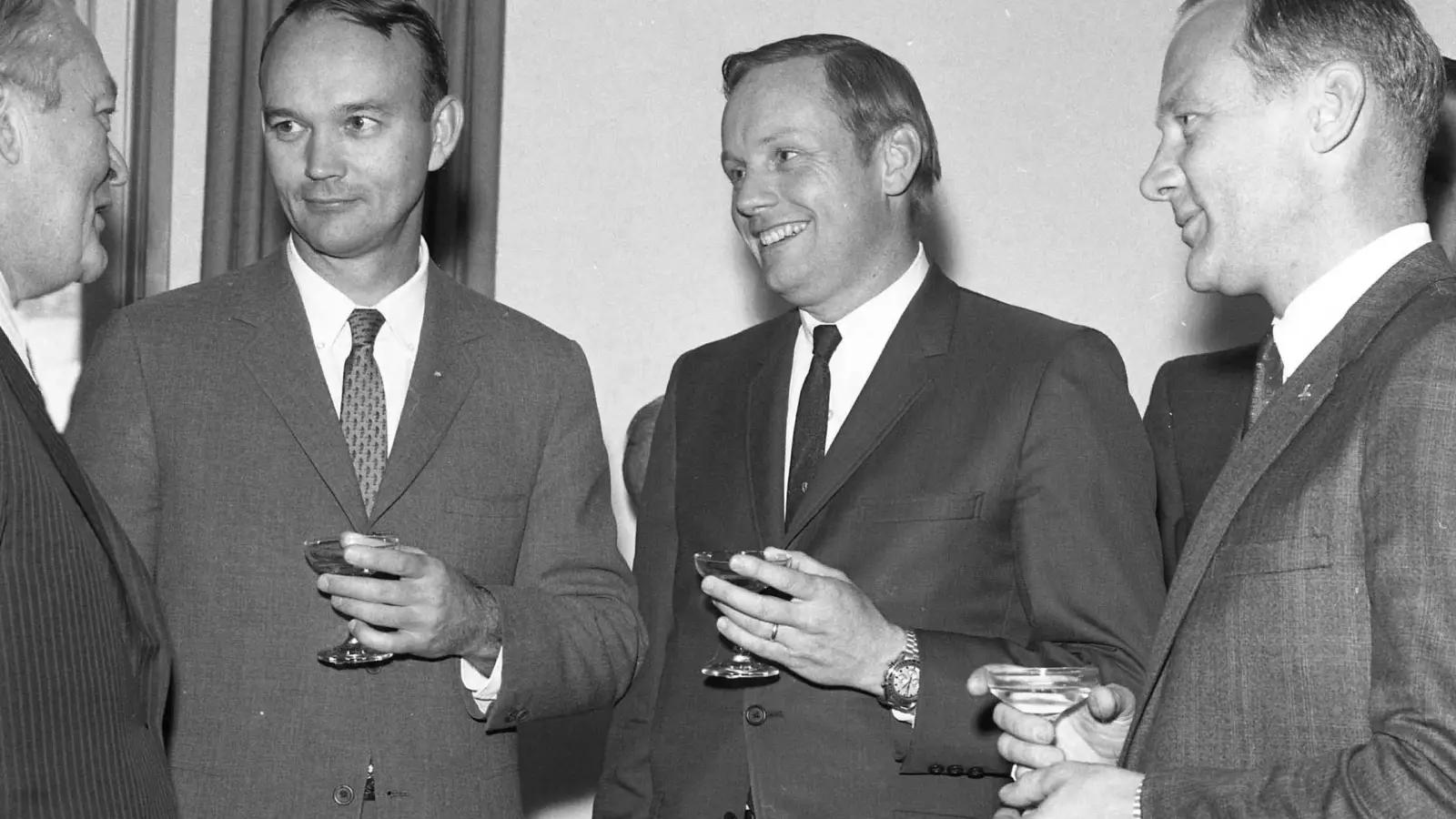
Armstrong's Speedmaster from the actual moon landing never left the lunar module: he left it inside Eagle as backup when the mission timer malfunctioned during descent, which is why Buzz Aldrin, not Armstrong, became the first person to wear a watch on the lunar surface. That original flight watch belongs to the Smithsonian. This is a different watch entirely.
Four months after Apollo 11, Omega hosted an Astronaut Appreciation Dinner at the Hotel Warwick in Houston on November 25, 1969, presenting 26 solid 18K gold Speedmasters to NASA's astronauts, numbered by the order in which each man first flew into space. Nixon and Agnew received numbers 1 and 2. Armstrong, who first flew on Gemini 8 in 1966, received number 17. The caseback reads "Astronaut Neil A. Armstrong, Gemini 8 - Apollo 11," with a central inscription: "To mark man's conquest of space with time, through time, on time." Armstrong wore it regularly in the years after, including during his time teaching engineering at the University of Cincinnati, where photographs show him wearing it while folding a paper airplane. The case was never polished.
The watch disappeared from public view in the 1980s and resurfaced decades later. RR Auction sold it live in Cambridge, Massachusetts on April 17, 2025, for a hammer of $1.7 million, $2,125,000 with buyer's premium, the most ever paid for a Speedmaster and the third-highest price ever paid for a space-flown or space-connected artifact, behind only a Soviet Vostok capsule and Buzz Aldrin's Apollo 11 flight jacket. Half the proceeds went to charities selected by Armstrong's son, Mark.
Elvis Presley's Omega, 18K white gold with Tiffany & Co. dial signature and 44 diamonds
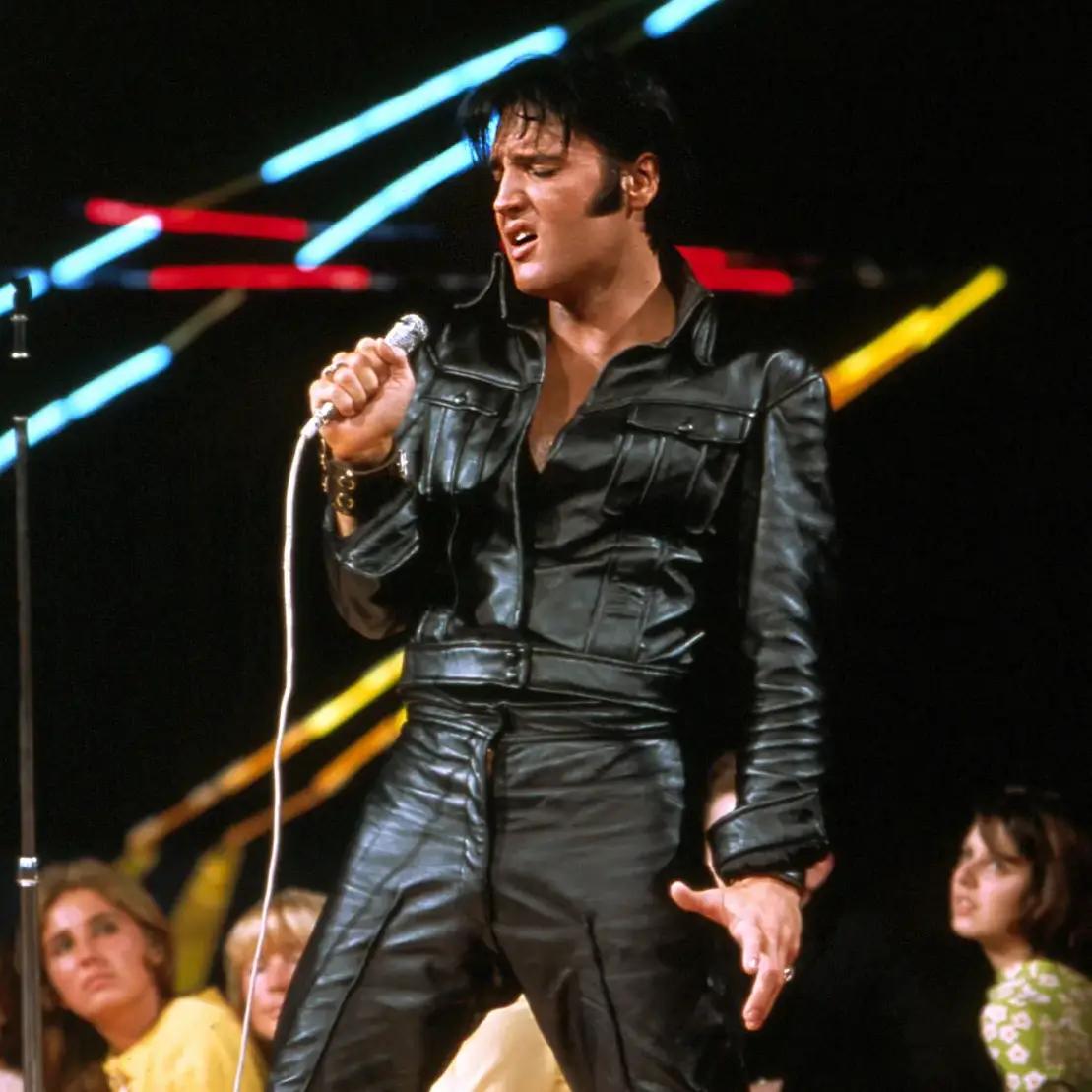
RCA Victor commissioned this watch from Tiffany & Co. to mark Elvis becoming, by their count, the first recording artist in history to sell 75 million records. He received it at a charity concert and luncheon on February 25, 1961, later declared Elvis Presley Day by the governor of Tennessee and the mayor of Memphis. The caseback reads: "To Elvis, 75 Million Records, RCA Victor, 12-25-60." Both the Omega and Tiffany & Co. signatures appear on the dial, a detail Tiffany still applies to select Patek Philippe watches today.
Elvis did not keep it long. At some point after receiving it, he met a man wearing a diamond-studded Hamilton, admired it, and proposed a trade on the spot. Elvis was known to give away or swap watches constantly; this was reportedly an ordinary Tuesday for him. The stranger kept the Omega for the rest of his life, and decades later his nephew consigned it to Phillips. It sold at the Geneva Watch Auction: SEVEN in May 2018 for $1,812,318, a world record at the time for any Omega at auction. The watch is now on permanent display at the Omega Museum in Biel, Switzerland, where Fratello Watches later got the rare chance to try it on: 18K white gold, 33mm, manual-wind caliber 510, 44 round brilliant-cut diamonds on the bezel.
Eric Clapton's Rolex Cosmograph Daytona ref. 6263 "Oyster Albino"
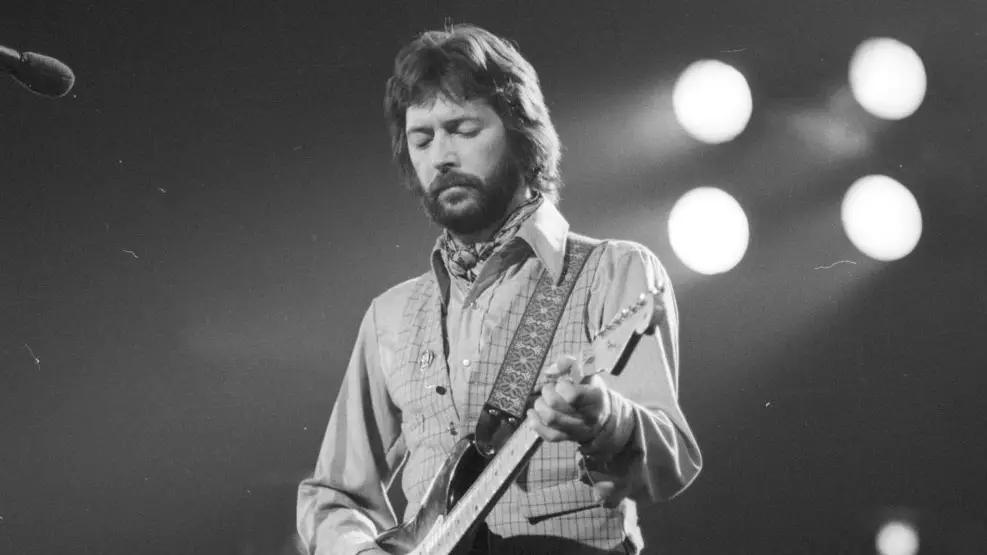
Only three examples of this specific Daytona configuration are known to exist. A standard Daytona from this era runs two-tone: a light main dial with black subsidiary registers for legibility. The Albino has no contrast at all. Every subsidiary dial matches the main chapter ring in the same silver-white finish, which makes the entire face recede into itself rather than pop, the opposite of what a chronograph dial is normally built to do.
Clapton bought his example in the late 1990s. He first sold it as property from his personal collection at Christie's New York on June 5, 2003. A few years later, at Sotheby's New York, it reappeared and smashed the existing world record for any Rolex Cosmograph at auction, selling for $505,000, five times its pre-sale estimate. That sale is widely credited, alongside Antiquorum's "Rolex Revolution" sale, with kicking off the modern era of mega vintage Rolex collecting. The same watch surfaced a third time at Phillips' Geneva "Watch Auction: One" in 2015, selling for CHF 1,325,000, roughly $1.4 million, and briefly held the record for the most ever paid for any Rolex at auction. Reference 6263, 1971 production, manual-wind caliber 727, 37.5mm stainless steel Oyster case with the correct period MK1 pushers and bezel.
President John F. Kennedy's Omega Ultra Thin OT3980
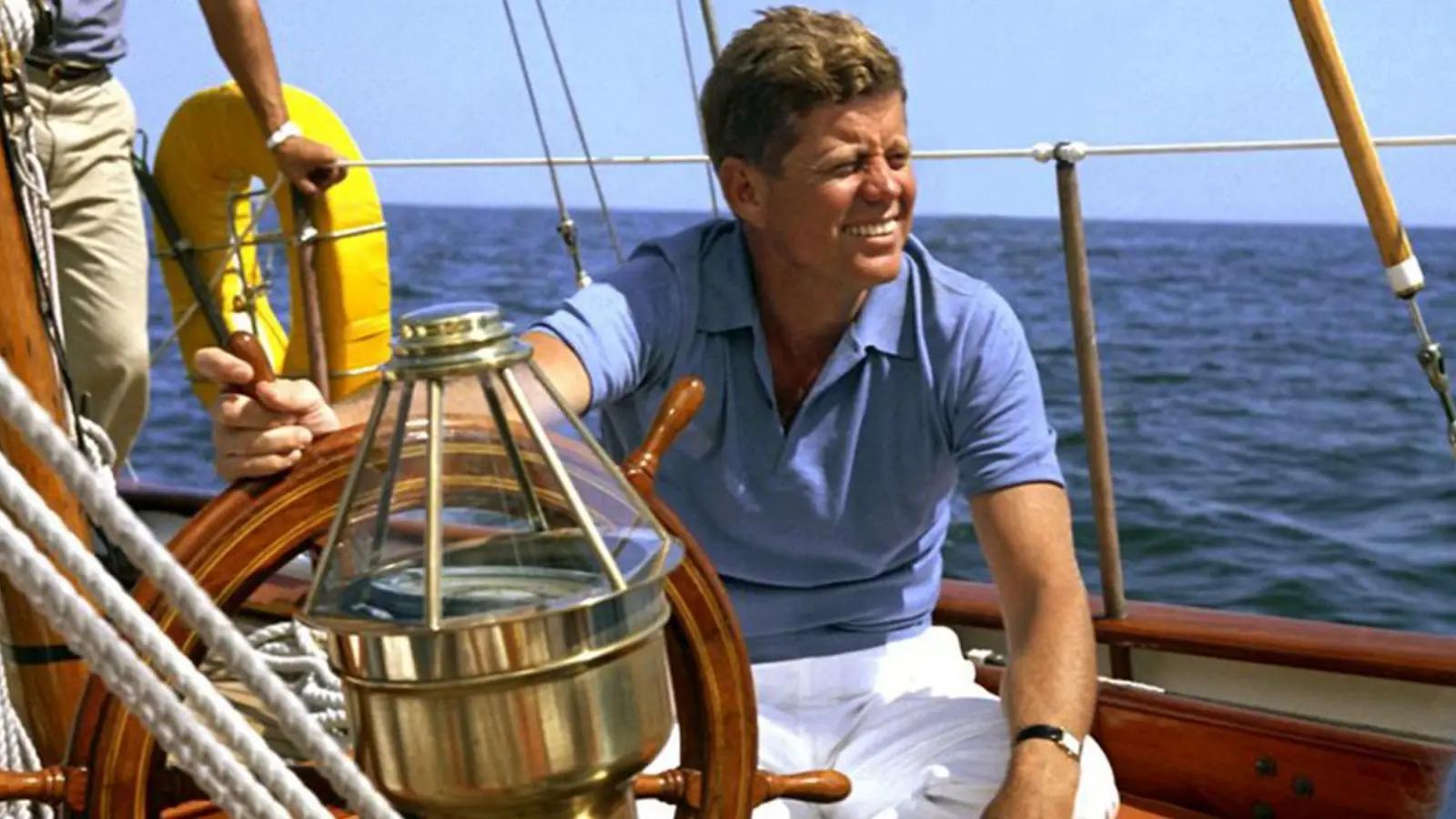
Florida businessman and longtime Kennedy ally Grant Stockdale gave then-Senator Kennedy this Omega upon his election in 1960, engraving the caseback: "President of the United States John F. Kennedy from his friend Grant." A LIFE magazine photograph from January 21, 1961, shows it clearly on Kennedy's wrist as he takes the oath of office. He was wearing it on November 22, 1963, in Dallas. Jacqueline Kennedy later wrote to Stockdale calling the Omega "nicer than the watch I gave him."
The watch passed through private hands for decades after the assassination before Guernsey's auctioned it in New York on December 15, 2005, as part of "John F. Kennedy: The Robert L. White Collection," alongside the late president's passports, a hotline telephone, and two sailboats. Omega itself placed the winning bid, $350,000, specifically to bring the watch home to its own museum in Biel. "Watches are emotional purchases, and we were very determined to procure this one," said Omega president Stephen Urquhart at the time. "It's important to Omega, due to its history, and will reside in the Omega Museum next to the first watch worn on the Moon, which is something Kennedy himself made possible." An 18K gold rectangular dress watch with a manual-wind movement, no complications beyond hours and minutes, currently valued well above its 2005 sale price given the confirmed presidential provenance.
Robin Williams' Hamilton, worn in Dead Poets Society
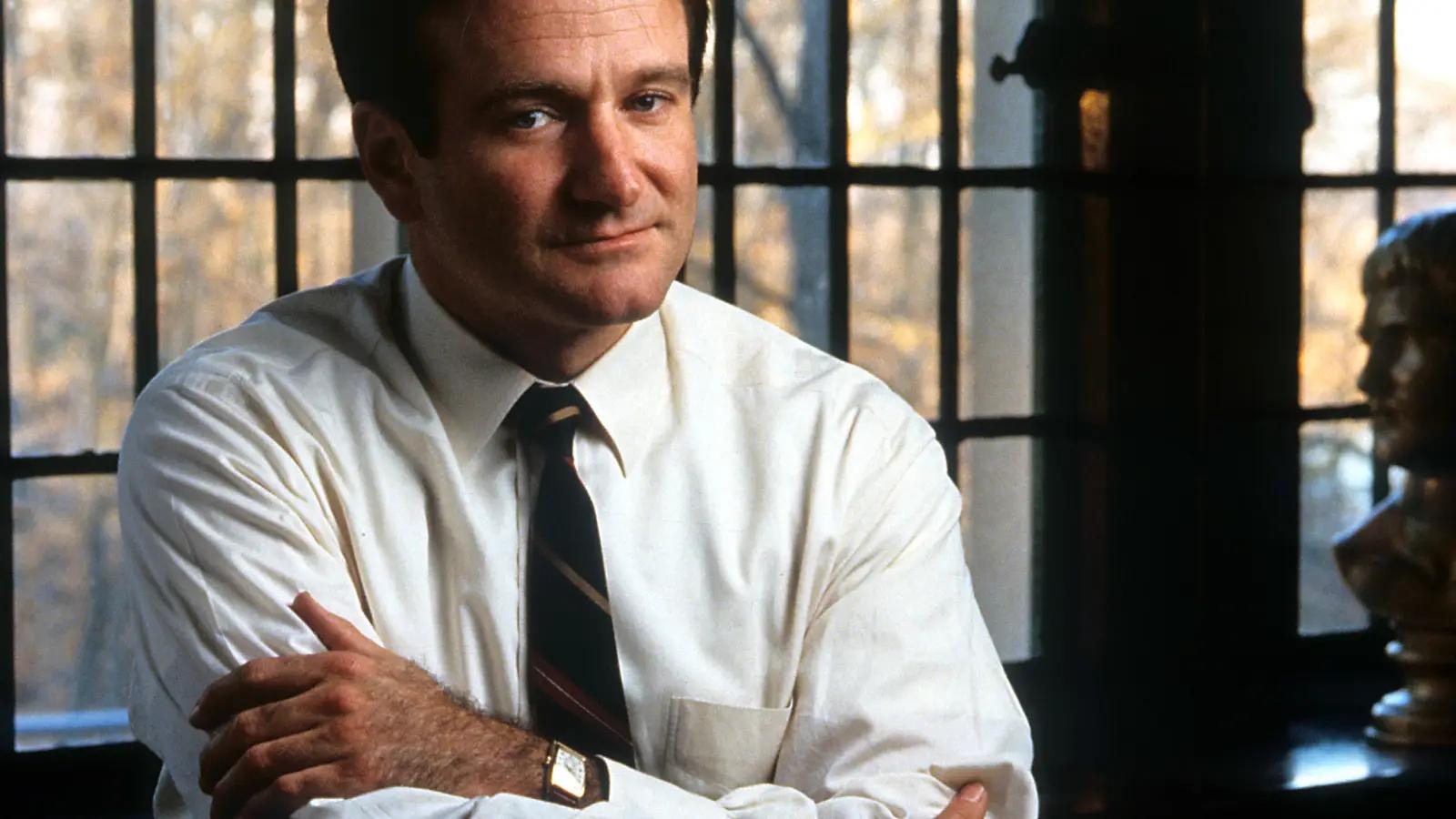
Robin Williams plays John Keating in Dead Poets Society, urging his students to seize the day and tear the theory out of their poetry textbooks. A gold-plated rectangular quartz Hamilton (movement 581001, case 6104) is on his wrist through the film, a genuinely inexpensive piece for its era, retailing at the time for roughly $350 as part of Hamilton's mail-order "Registered Edition" line. Its on-screen use was directly confirmed to Sotheby's by the film's own producer, Steven Haft, via email, ahead of the sale. The caseback carries a simple engraving: "Robin Williams Dead Poets Society 1988."
Williams kept the watch after filming. He turned out to be a serious, wide-ranging collector, not an incidental one: his personal collection included Jaeger-LeCoultre, Cartier, IWC, Panerai, Franck Muller, and Bulgari, among smaller independent names. In 2018, four years after his death, Sotheby's included 44 of his watches in an auction titled "Creating a Stage: The Collections of Robin Williams and Marsha Garces Williams," raising money for causes including The Juilliard School and the Wounded Warrior Project. His wife, Marsha, described their approach: "We chose things that made us laugh, think, or want to be their caretakers for a period of time so we could see them regularly." Pre-sale estimate on the Hamilton was $1,000 to $2,000. It closed the entire watch portion of the sale by realizing $32,500, sixteen times its high estimate, and the single most talked-about lot in a sale that also included a $52,500 tourbillon minute repeater. Mr. Keating told his students that the powerful play goes on, and they may contribute a verse. His own watch, worth almost nothing on paper, ended up making one anyway.
We may earn a commission on purchases.