Introduction
Space movies split cleanly into two categories: the ones dramatizing something that actually happened, and everything else. That split matters for the watches too. When a film is reconstructing a real mission, the watch on screen usually has real history attached to it, sometimes the exact reference that flew. When it's pure invention, the watch is a costume choice, and the more interesting ones are the choices that don't make obvious sense (a dive watch on a planet with almost no water, a chronograph missing its own bezel). This one runs both tracks: real missions first, then fiction.
Omega CK 2605 & Speedmaster Professional 105.012

Gosling's Armstrong wears three watches across the film, and the progression tells its own story. In his early NASA test-pilot years, before anyone including him has reason to think Apollo is coming, he wears an Omega CK 2605, a 1940s dress watch with a honeycomb dial that predates the Speedmaster's existence entirely. As training scenes shift toward Gemini, his wrist carries the ST 105.003, the reference NASA flight-qualified in March 1965, the same watch Ed White wore on the first American spacewalk that June (collectors still call the 105.003 the "Ed White" because of it). By Apollo 11, he's in the 105.012, the first 42mm Speedmaster with crown guards and the word "Professional" on the dial. The film gets a detail most viewers miss exactly right: Armstrong left his own Speedmaster behind in the lunar module as a backup timer after the onboard clock malfunctioned, which meant it was Buzz Aldrin's Speedmaster, not Armstrong's, that became the first watch worn on the Moon's surface. Omega built and loaned the production more than ten Speedmasters across these references to get it right.
Omega Speedmaster Professional 105.012
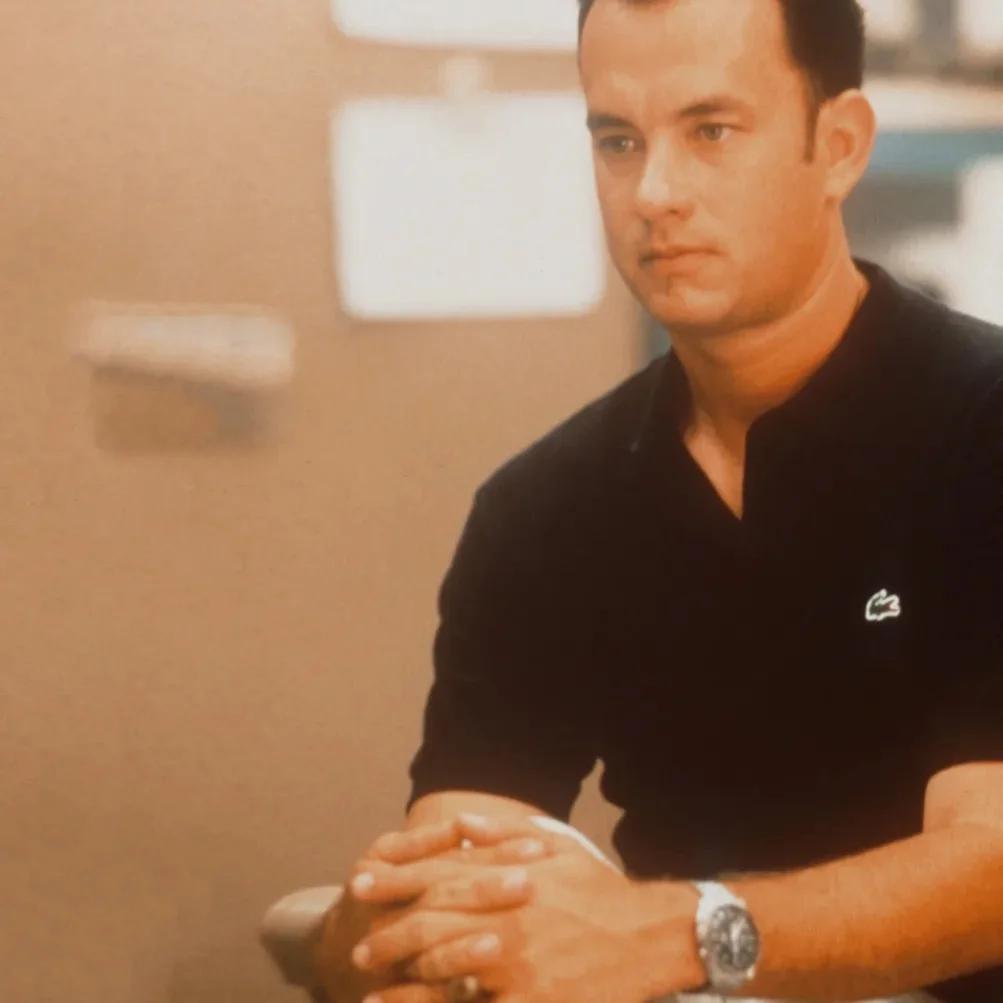
On April 13, 1970, an oxygen tank exploded aboard Apollo 13 and took most of the spacecraft's electronics with it. The mission computer went offline. The electronic timer went offline. What kept working was the Speedmaster on Jim Lovell's wrist. When the crew needed to time a 14-second engine burn to correct their trajectory back toward Earth, with nothing else on board reliable enough for the job, Lovell counted the seconds manually. The burn was accurate, and the crew survived. NASA awarded Omega a Silver Snoopy Award that October for the watch's role in getting them home, the same 105.012 reference that had been flight-qualified for spacewalks since 1965 after outlasting three competing submissions from Rolex and Longines-Wittnauer in NASA's own testing. Ron Howard's film puts the same reference on Hanks's wrist for the recreation. Original Apollo-era 105.012s now sell for $10,000 to $20,000 depending on condition; Omega's own Apollo 13 anniversary reissues run $6,000 to $8,000.
Seiko M354 Memory Bank Calendar
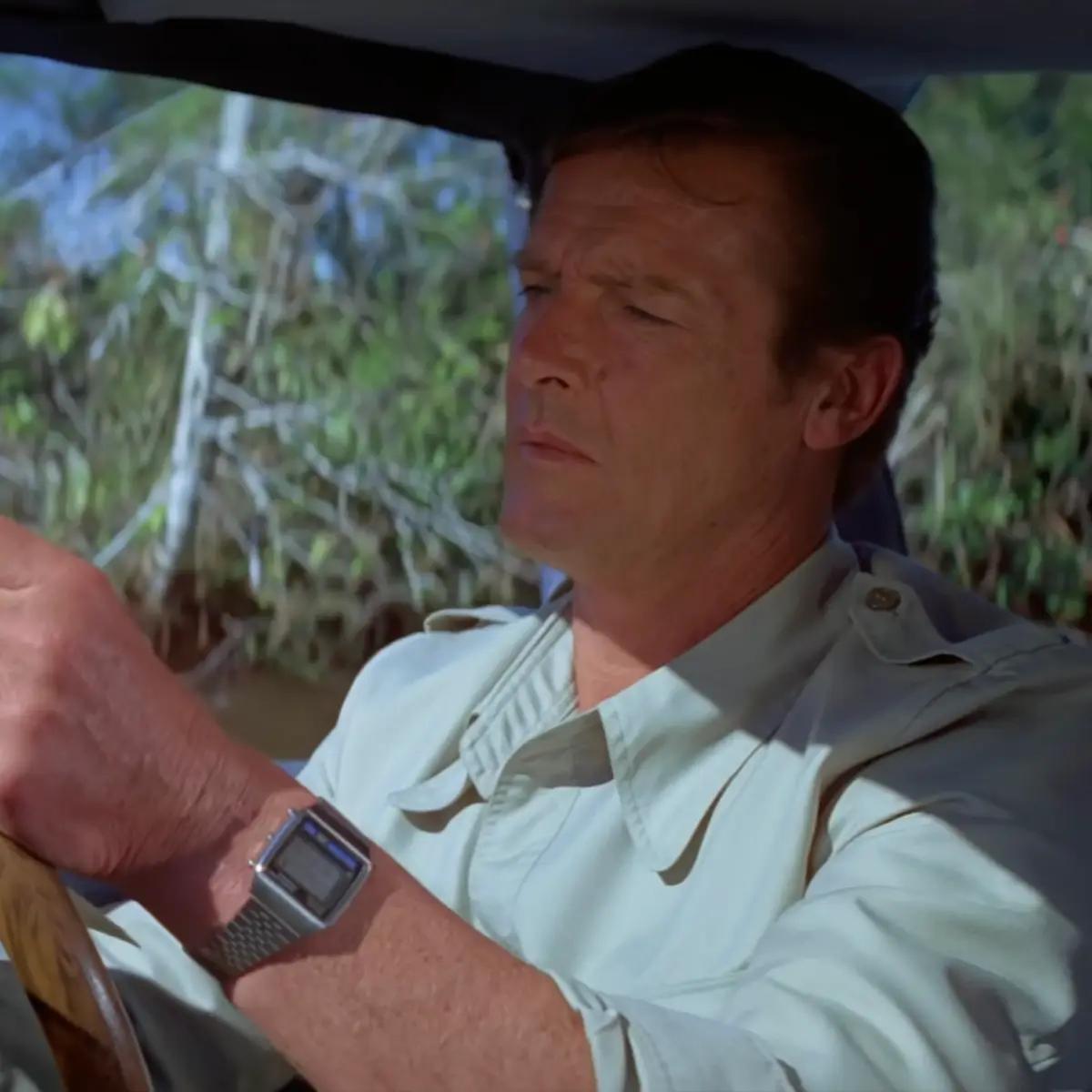
Moonraker was Bond's response to Star Wars two years earlier, and it was also the first Bond film where 007 wore nothing but Seikos, no Rolex, no other sponsor. The M354 Memory Bank Calendar gets used on screen as a remote detonator. Its actual function was a digital calendar that could store dates up to the arbitrary cutoff year of 2009, which in 1979 counted as genuinely impressive consumer technology. The detonator function was the prop department's addition. The 2009 cutoff was entirely Seiko's own idea, and nobody involved in either decision ever explained the other one.
Casio F-100
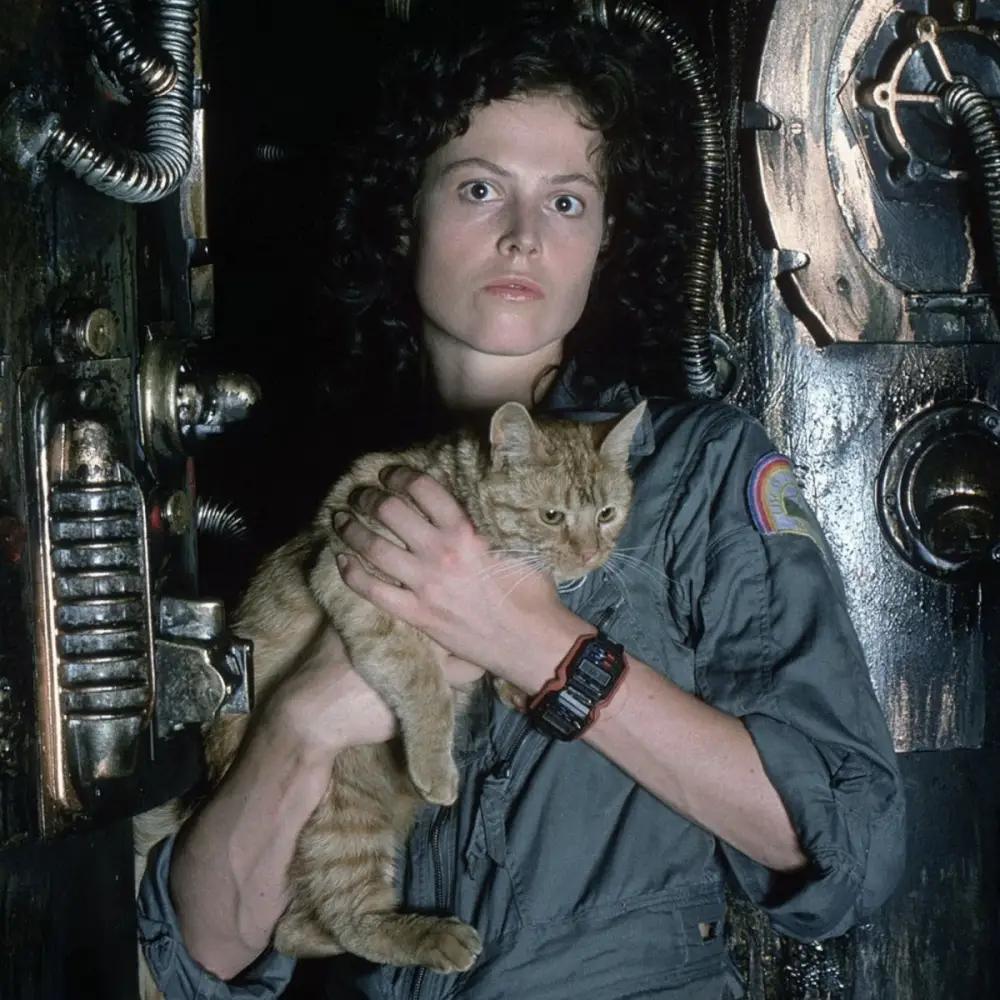
The F-100 was Casio's first watch made entirely from resin, including the case back, and it lasted exactly one year in production before being discontinued in 1979, the same year Alien hit theaters. Ridley Scott's prop department joined two of them onto a single shared strap with a red backing plate, worn as one continuous unit, a configuration that exists nowhere outside this film. The industrial, unglamorous look fit Scott's entire approach to the Nostromo: equipment that exists to be used, not admired. Collectors now call the prop the "Casio Alien," and in 2020 Casio reissued the underlying design as the A100 series, an explicit nod to the legacy of a watch that was already out of production when the film that made it famous came out.
Seiko 7A28-7000
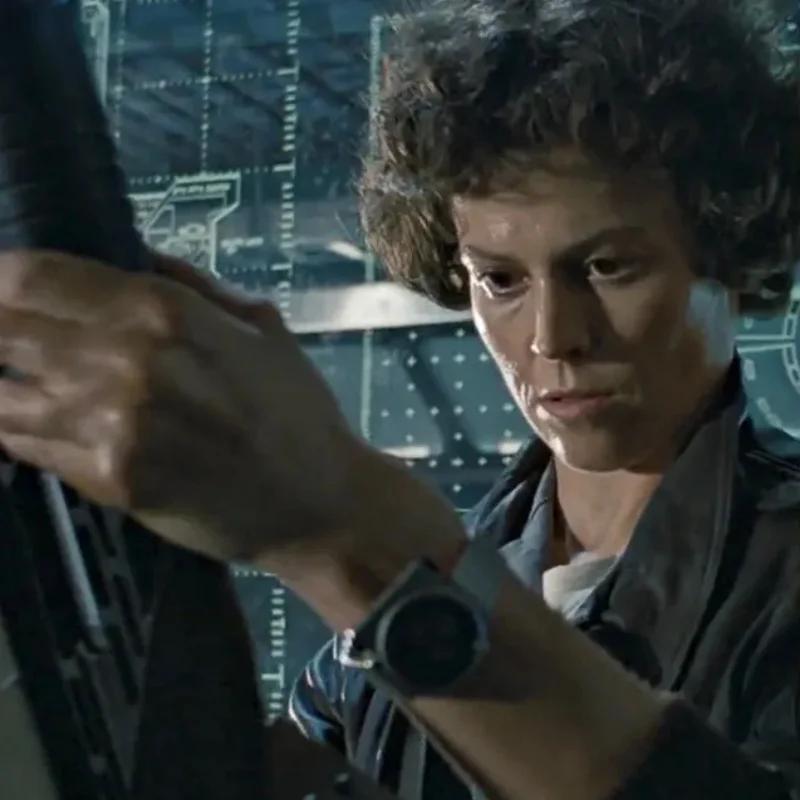
When Seiko released the 7A28-7000 in 1983, it was the world's first analog quartz chronograph, engineered before any competitor managed the same feat. Giorgetto Giugiaro, the designer behind the DeLorean DMC-12, gave it an angular, almost industrial case that looked like nothing else on the market. James Cameron reportedly chose it for Ripley himself, which tracks for a director known for technical obsession over costume-department convenience. Almost nobody recognized in 1986 that Ripley was wearing the most advanced chronograph movement in the world at the time. The word "Speedmaster" even appears on the dial, used descriptively rather than as a trademark concern, a detail that reads strangely now given which other watch owns that name in space-movie history.
Casio Pathfinder PAW-1300
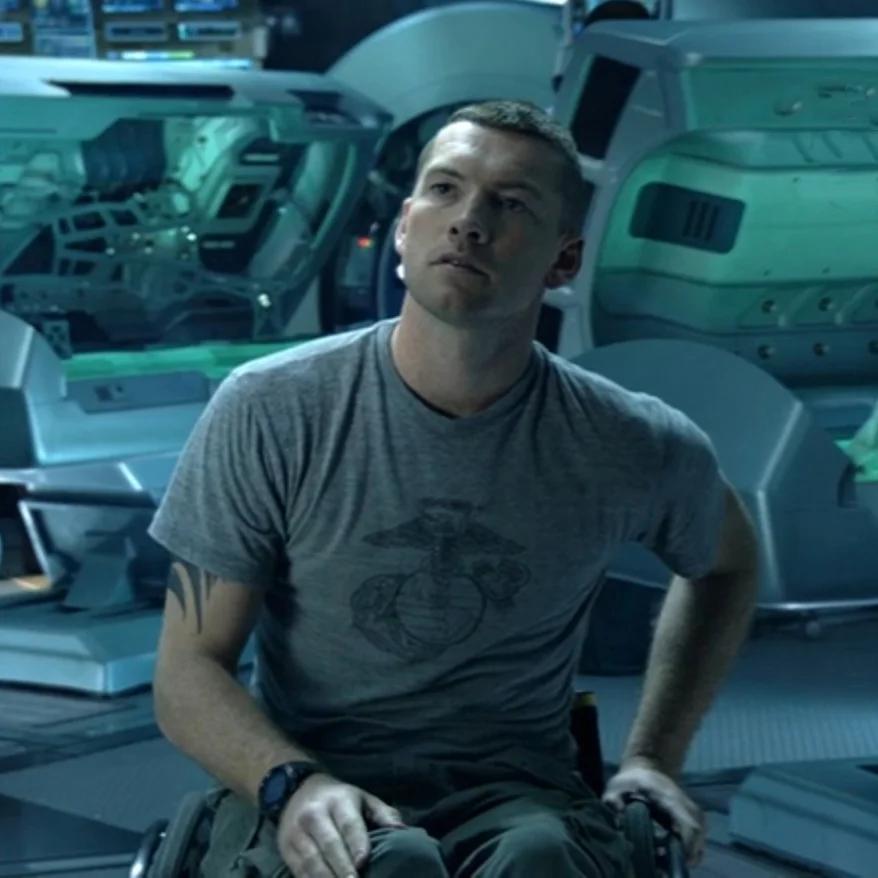
Jake Sully arrives on Pandora a former Marine with no functioning legs and no clear reason to be there beyond a genetic match to his dead twin's avatar. The solar-powered PAW-1300 on his wrist, built around Casio's Tough Solar system with a digital compass, altimeter, barometer, and thermometer, is the watch of someone who expects to be somewhere without infrastructure, military-surplus thinking applied to a situation that's entirely outside military experience.
G-Shock GA-700UC-3A
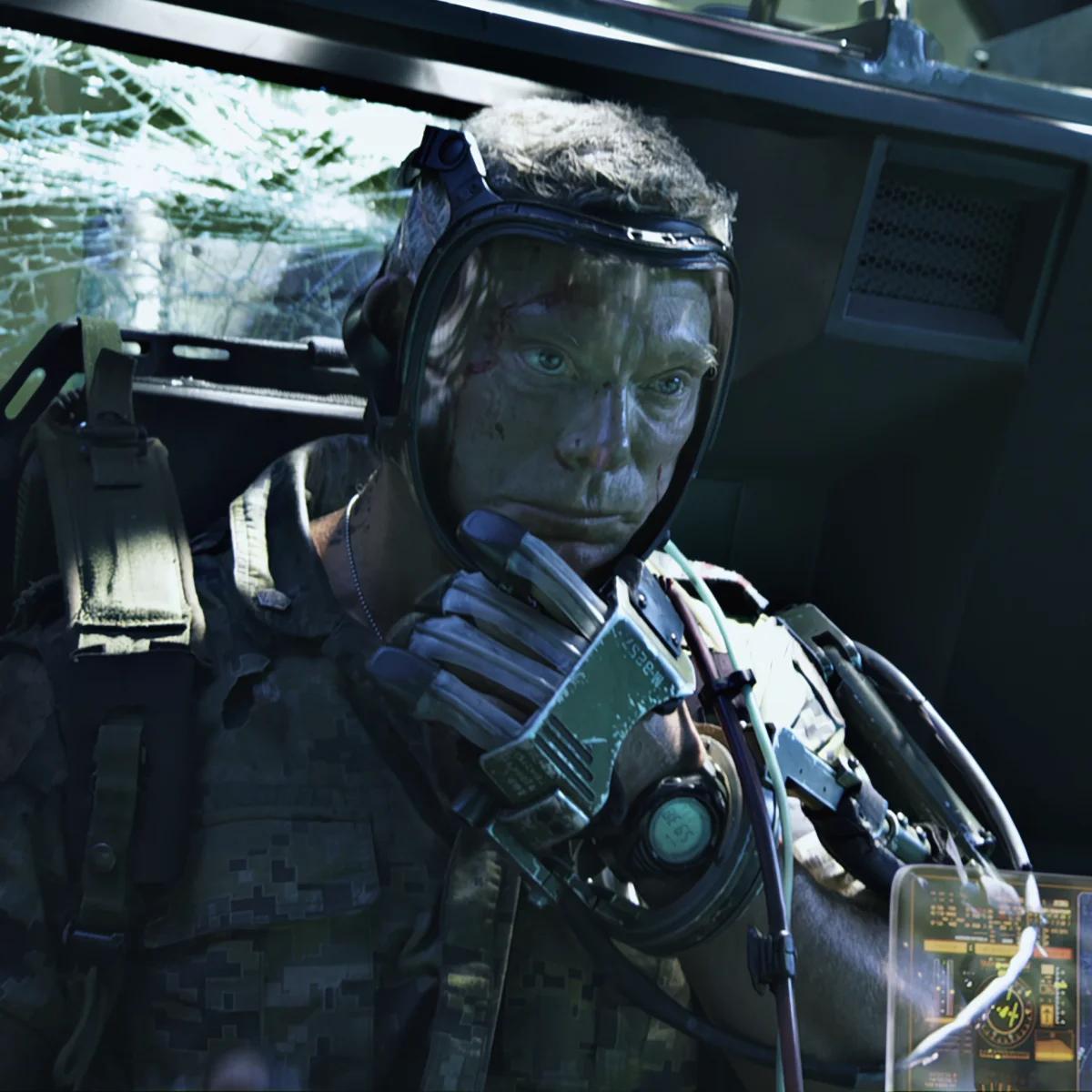
Quaritch dies at the end of the first film. James Cameron brought him back for the sequel loaded into a Na'vi body built from his own DNA and pre-death memories. The olive-drab G-Shock from the RDA's Utility Color Collection is one of the smallest human things left about him: not re-selected for the new body, just carried forward into it, the same way old habits are.
Omega Speedmaster Professional
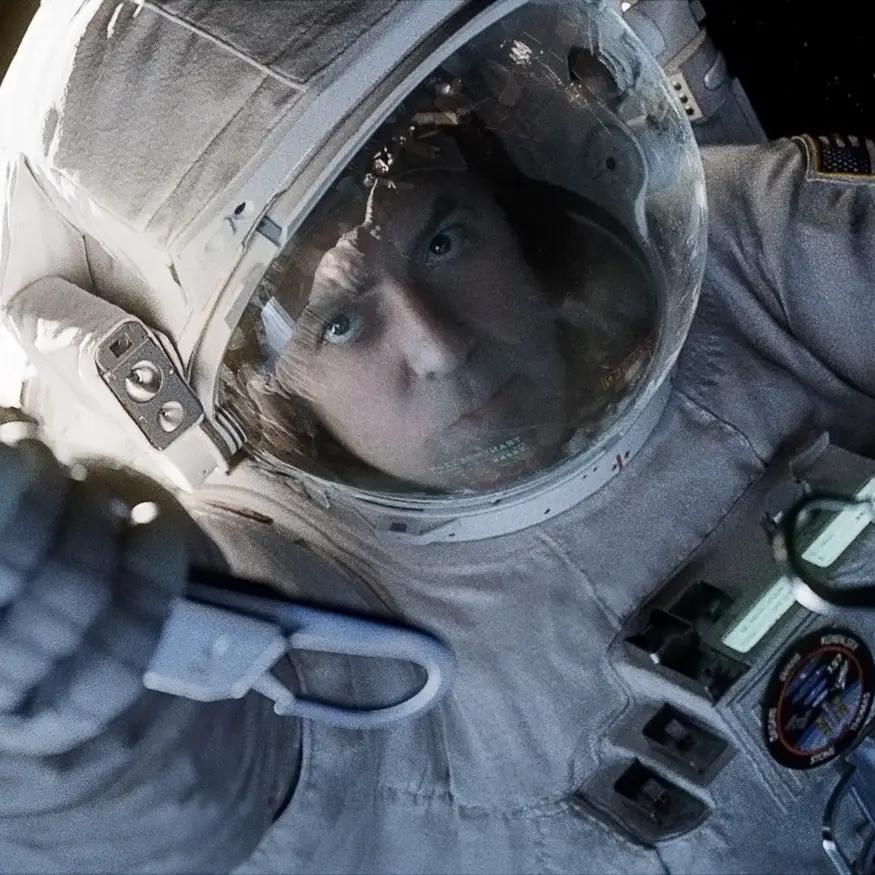
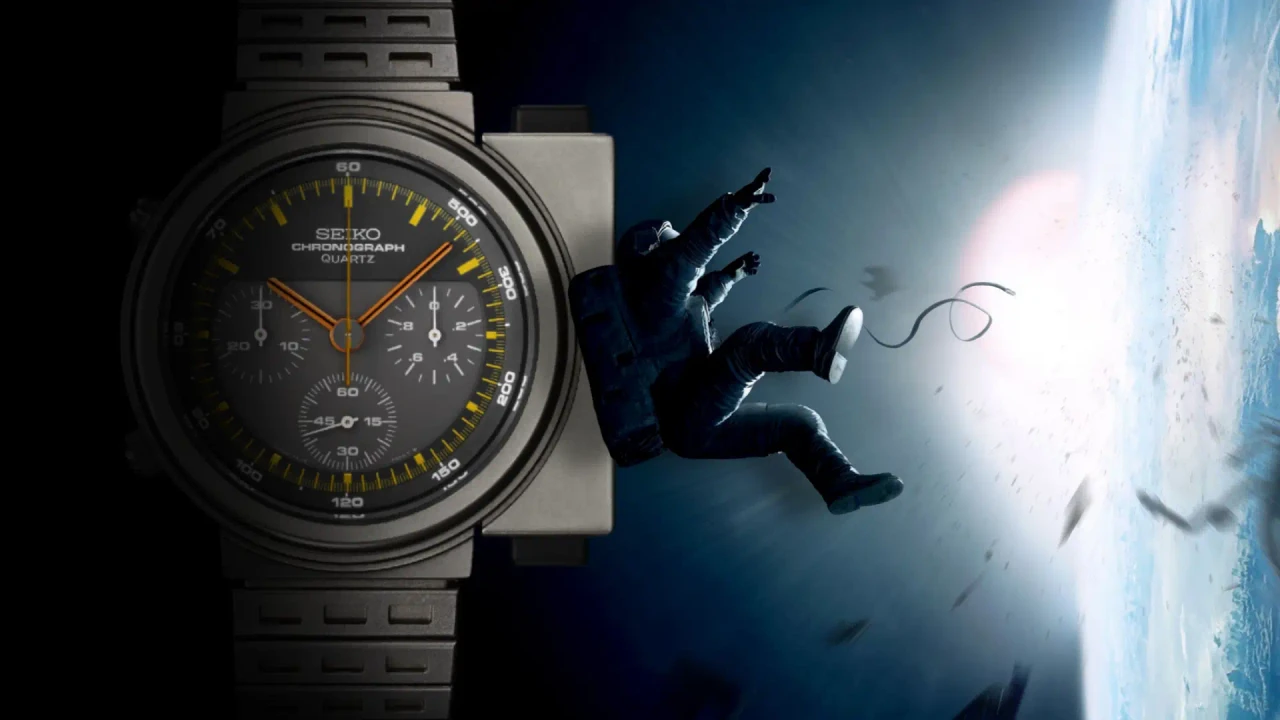
Kowalski's Speedmaster isn't a real watch. It's rendered into the exterior of a CGI spacesuit with only the watch head visible, echoing how NASA astronauts actually wore Speedmasters strapped over their suits during real EVAs, where an analog dial stays legible in conditions that kill an LCD screen. Clooney is a real Omega ambassador, so the casting wasn't a stretch. What's stranger is what's missing: the tachymeter bezel, the graduated scale that makes every production Speedmaster instantly recognizable, simply isn't rendered onto Kowalski's watch. Nobody involved with the production has ever explained whether that was intentional or an oversight in the model. Sandra Bullock's Dr. Stone, notably, wears only a plain digital wrist computer, a quiet piece of character writing: Kowalski is the one invested in NASA's traditions, and his watch says so before he does.
Hamilton Khaki Field "Murph"

Cooper leaves his daughter this watch before disappearing into space, and it ends up carrying the film's most important message across dimensions via Morse code hidden in the sweep of its second hand, spelling out "Eureka" under a loupe. Hamilton built it as a film-only prop working directly with Christopher Nolan and production designer Nathan Crowley. Audience demand after the film's release eventually pushed Hamilton to put a commercial version on sale in 2019, five years later, and it sold out fast.
Hamilton Khaki Aviation Pilot Day Date

Cooper is a former NASA pilot turned farmer who ends up piloting a spacecraft through a wormhole, and the watch on his wrist for the whole journey is the same one he wore behind a tractor. Hamilton has supplied American military aviators since the 1940s, and the Pilot Day Date reads as exactly what a working pilot who never thinks about his watch would actually wear. The film's ending hinges on a watch transmitting data across dimensions, but it isn't this one; Cooper stays indifferent to his own watch throughout, which makes the contrast with Murph's watch land harder.
Hamilton Khaki Navy BeLOWZERO
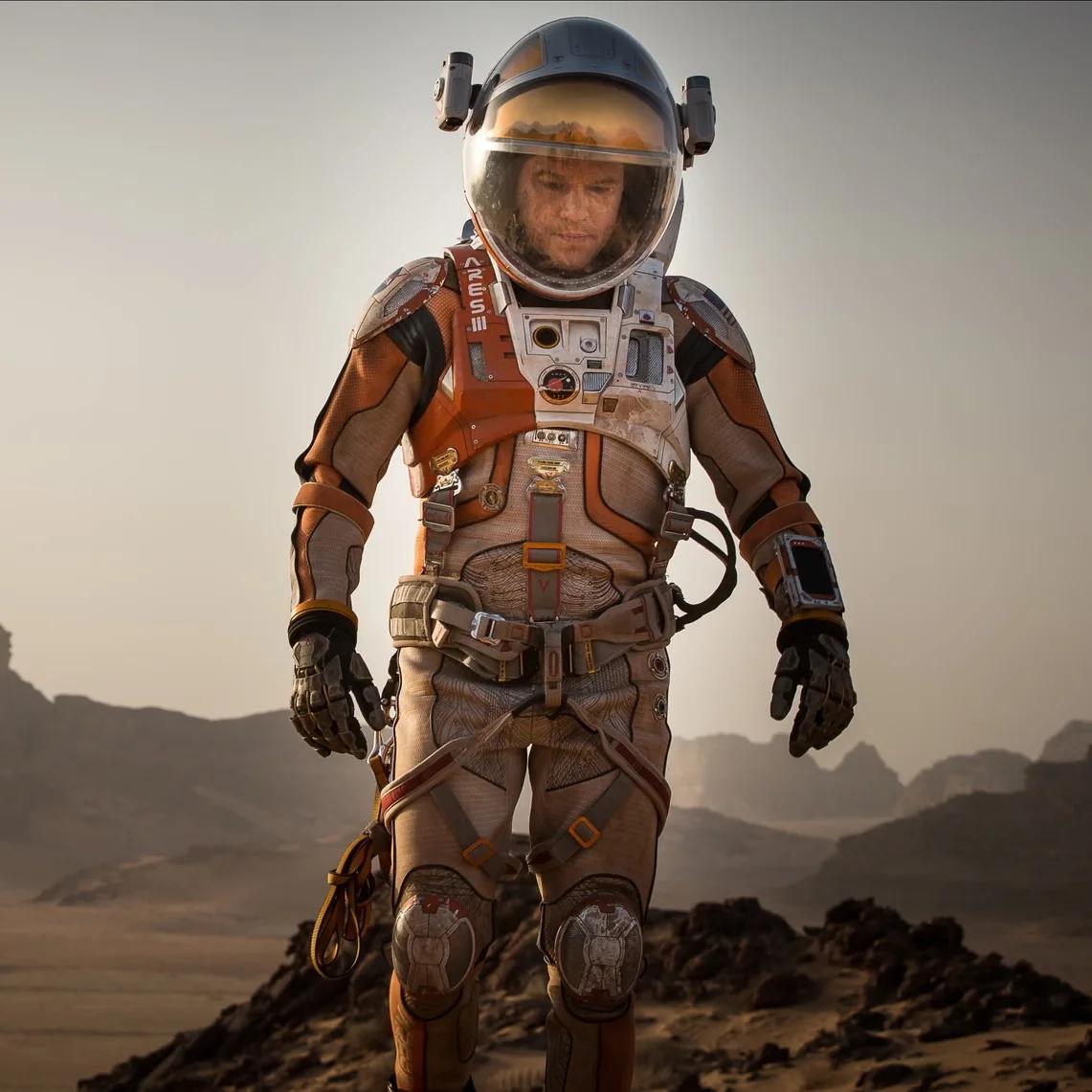
Watney spends the film stranded on a planet where water exists mostly as ice and vapor, wearing a dive watch rated to a thousand metres, pressure Mars will never put it under. Prop master Noel Cowell went with Hamilton, continuing a relationship that runs back to Frogmen in 1951, rather than the Omega Speedmaster Professional, the only chronograph actually flight-qualified by NASA for spacewalks, an absence more than a few watch forums noticed in a film this committed to scientific accuracy elsewhere. A separate detail nobody in the film comments on: the watch runs on a standard 24-hour Earth cycle, while a Martian sol runs about 24 hours and 39 minutes. For the real 2004 Mars rover missions, JPL scientists carried custom watches adjusted specifically to sol time. Watney's watch has no such adjustment.
Omega Speedmaster X-33

Loosely based on the 2007 Lisa Nowak incident, the film follows a NASA mission specialist who returns from orbit and finds she can no longer fully inhabit Earth. Her Speedmaster X-33 wasn't chosen for symbolism. It's the actual instrument real astronauts wear on the job, developed by Omega with NASA and the European Space Agency as an analog-digital hybrid built for mission elapsed time, countdown functions, and the temperature extremes of low orbit. Putting it on Lucy Cola isn't a metaphor for space. It's the equipment.
Omega Speedmaster Professional Moonwatch

Harper is a disgraced former NASA astronaut trying to stop the Moon, knocked out of orbit, from colliding with Earth. His watch has actual history with a real version of that kind of crisis: the same Moonwatch reference, in different form, was on Jack Swigert's wrist when he timed Apollo 13's course-correcting burn after its onboard systems failed. Omega previewed Wilson's casting on its own social channels ahead of the film's release, rare advance billing for a watch brand tied to a movie role rather than a real astronaut.
TAG Heuer Connected Calibre E5
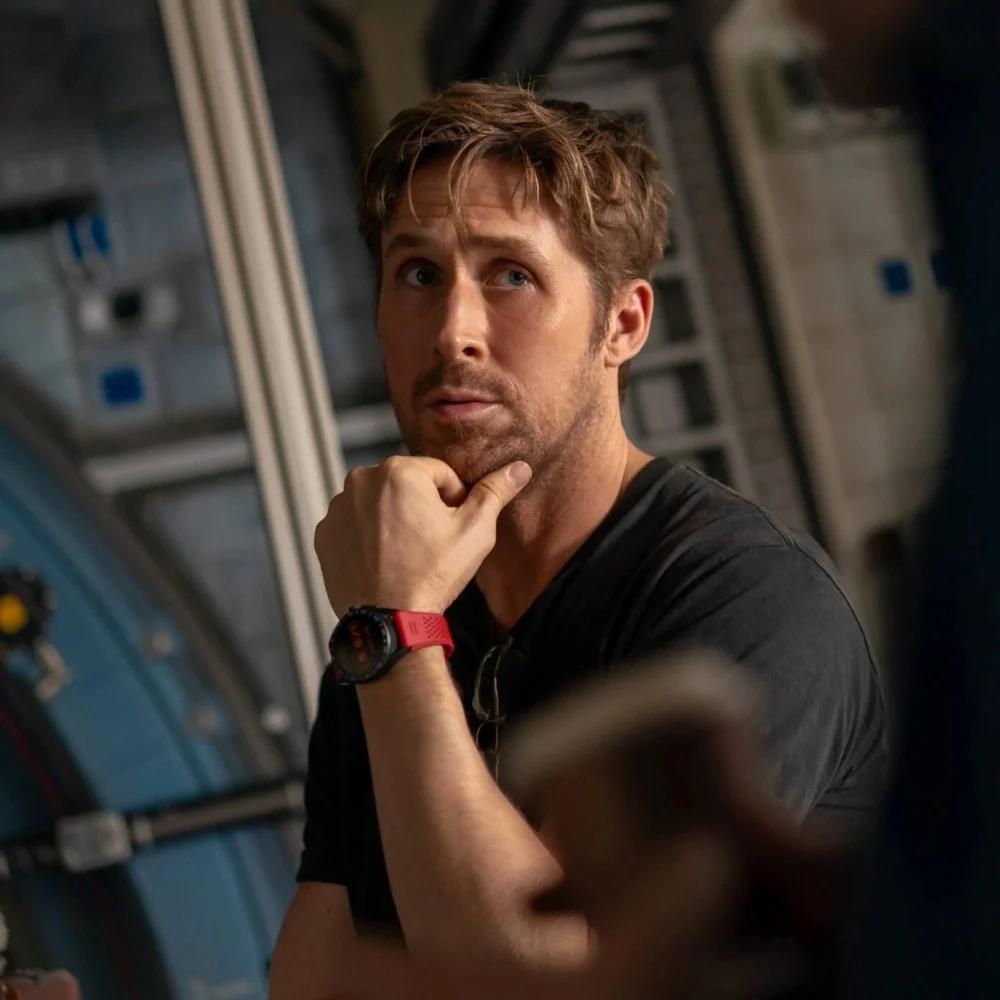
Grace wakes up alone on a spacecraft with no memory of who he is, slowly piecing together that he's humanity's last chance to stop a mysterious substance from dimming the sun. A smartwatch is an odd choice for a film this committed to hard-science plausibility, and it isn't the tool an Apollo crew would have trusted, but it's exactly the one built for the isolation this story is actually telling. TAG Heuer provided the watch directly for the production, continuing Gosling's ambassadorship with the brand since 2021.